(Photo courtesy of Joe Tacynec)
“Climb the mountain not to plant your flag, but to embrace the challenge, enjoy the air, and behold the view. Climb it so you can see the world, not so it can see you.” David McCullough Jr.
“I’ve learned that everyone wants to live on the top of the mountain, but all the happiness and growth occurs while you’re climbing it.” Pat Summit, Quotes from the Summit
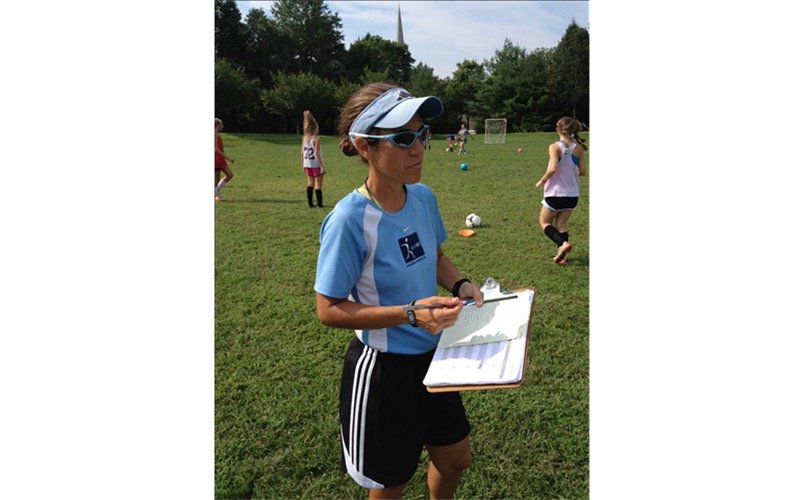
In February of 2007, Danielle Fagan, then head coach for the Conestoga girls soccer program and club coach at Lower Merion Soccer Club, embarked on the arduous journey of climbing to the top of Africa’s tallest peak 19,341 feet above sea level. Kilimanjaro, the tallest free-standing mountain in the world, is composed of volcanic rock that began erupting over a million years ago with a glacial cap that once stretched for miles and now in a state of rapid decline.
“One of the things I learned from that experience is you can prepare for anything, but you can never prepare for everything.”
Hikers wishing to navigate toward Kilimanjaro’s peak must undergo five different climate changes. “We started out in t-shirts and shorts, and we ended up at negative 15 at the top of the mountain.” The first zone represents a bushland ripe for cultivation and agriculture, followed by a rainforest, eventually blending into expansive fields of shrubs, heather, and tall grasses where the temperature begins to drop rapidly. Eventually, climbers hike their way into the alpine desert, culminating in the arctic zone, where they are at the mercy of the elements.
“When we got to about 600 feet from the top, I was walking so slow. It took me longer to climb that last 600 feet than it did to start the summit from base camp.”
Bodies at this elevation and exposure may undergo the effects of any range of conditions from sunburn and dehydration to frostbite, altitude sickness, hypoxia, and even edema. Fagan’s expedition took over seven hours to go from base camp to summit, on top of another few days to get to base camp, but the fitness enthusiast who now competes in IRONMANs recalls “It was like I had one lung, and so I just had to put one foot in front of the other. Put my head down, and keep going until I reached the top.”
When Fagan returned to her team at Conestoga, she used her experience as a metaphor to help her players prepare for the season. Mapping out the climb from pre-base camp to summit, and using pregame quotes from her favorite coaches UNC’s Anson Dorrance and Tennessee’s Pat Summit, she gave handouts to her players, referencing opponents or situations.
“Then it evolved into me just writing my own stories,” she said, “and so the year we did the Kilimanjaro climb during the season, every pregame handout related to something that happened while I was climbing that mountain.”
Conestoga finished the 2007 season with 23-2-1 record, claiming the school’s first state soccer championship after they defeated Penn Trafford 2-0 in the AAA final at Hersheypark Stadium. The following year, Fagan’s team repeated as AAA champs, this time taking down Peters Township 2-1.
Find the list of coaches who’ve won back-to-back state soccer titles and climbed Mt. Kilimanjaro.
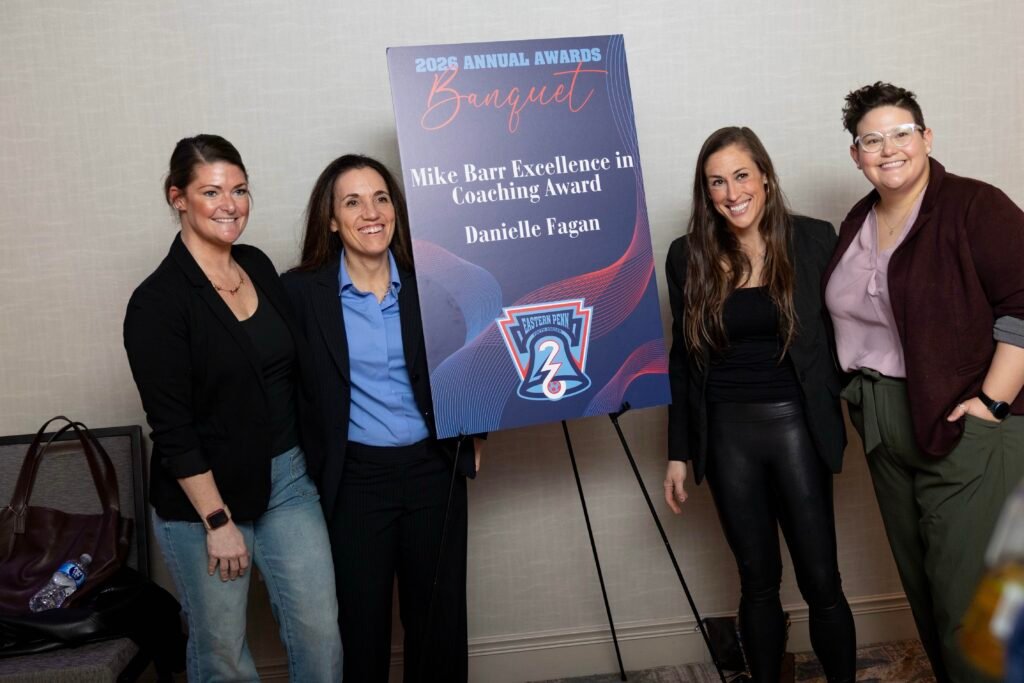
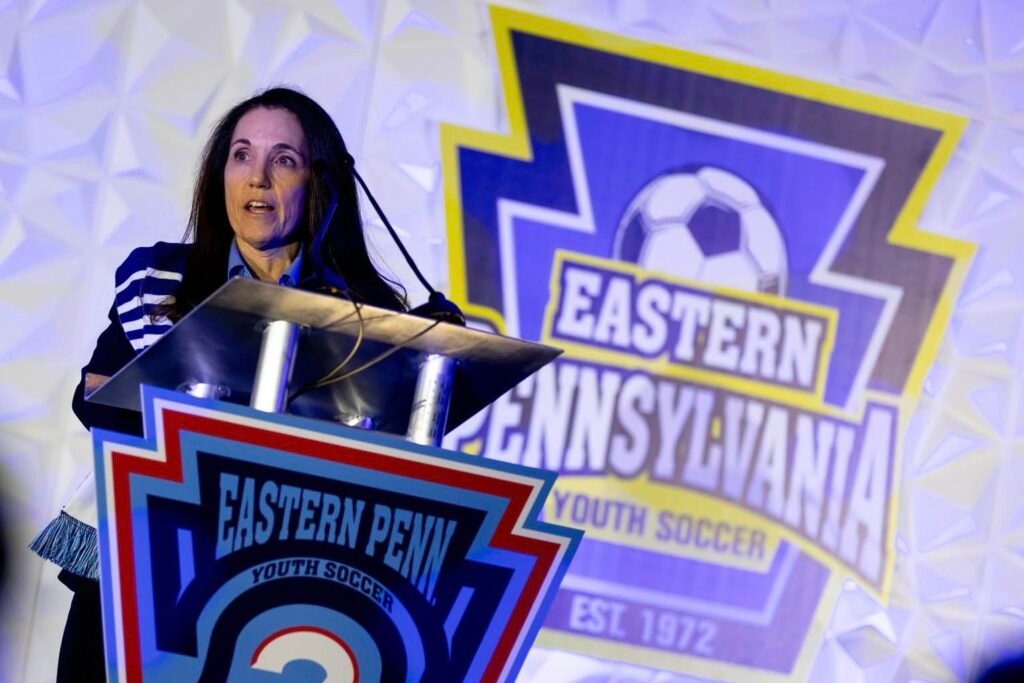
Friday night, Fagan received the Mike Barr Award for Coaching Excellence at the Eastern Pennsylvania Youth Soccer Association Awards Banquet. A soccer lifer from Massachusetts who’s dedicated her life to growing the game in the Philadelphia area, Fagan celebrated her accomplishments with former players and assistant coaches, including Kaylen (Bowles) Kirschner and Murphee Greeley, who played for Fagan from the age of 11 at Lower Merion until her senior year at Conestoga. Greeley scored the first goal and assisted the winner in the 2008 final.
“One of the things I’ve always said about those teams is that yes, we had a lot of talent,” Fagan said. “You can’t really win without that. We had players that worked really hard and bought into the system. But it was really about the belief in the team, team building, and team bonding that we had that made the biggest difference. All the intangibles and things we did off the field as opposed to the X’s and O’s.”
With a career record of 116-15-5 at Conestoga, Fagan left the program in 2010 to join the coaching education staff at EPYSA and take on long-term roles with the ODP programs at the state and regional levels. At EPYSA, she worked alongside Barr as the Assistant Director of Coaching and made a stronger push for creating more opportunities for women and girls in coaching. Together, Fagan and Barr started the first coaching course for women, which has since sparked numerous courses and programs like it around the region and the country. She’s also been an educator with United Soccer Coaches (formerly NSCAA) ever since.
As a leader of leaders, Fagan comes across coaches of all styles and finds herself trying to instill a few universal qualities that can enhance any coach’s craft. “Number one, be prepared,” she said. “Always show up to training with a plan. I see too many coaches out there who just wing it, or they go on Youtube to look at a video or are looking at the video on the field because they’re looking up something to do.
“Number two, I’m a real proponent for game-like activities,” she said. “I want the player to have fun and enjoy being out there, and waiting in long lines, waiting your turn, is just absolutely brutal.” Fagan remembers her days as a player, missing a shot, taking several minutes to retrieve the ball before getting back in line, wasting a majority of the training exercise outside of the training.
Fagan considers play a vital part of the plan. “if you could just make it part of your plan, it makes it so much easier. Then the kids are encouraged to learn and make decisions within the actual training session versus you telling them what to do.”
Fagan’s third quality relates to building confidence in the players by avoiding being a “joystick” coach, a term Fagan admits she borrowed from another coach in her past. The need to always be hands on is often observed across youth soccer fields all over America. Instead, Fagan feels we should allow players to grow by thinking and feeling their way through training and game experiences versus manipulating their every movement.
In addition to running her own coaching business, Fagan has also been the Technical Director at Colonial Soccer Club since 2017 and oversees the development for over 1,000 players ranging from pre-K to high school seniors among the academy, intramural, and travel programs. Colonial also runs several successful programs for adult men and women.
But a lot has changed since Fagan first began coaching. The number of players committing full-time year round to the sport, traveling great distances for practices and games, and the explosion of premier leagues, elite development programs, and national championship pathways. Fagan referenced a report that was published by the American Academy of Pediatrics in early 2004 that suggests 70% of kids drop out of organized sports by age 13. Another study in Pediatrics suggests that the two leading causes are overuse and overtraining injuries and burnout. The professionalization of youth sports certainly has affected most youth soccer clubs, yet Fagan and her staff attempt to maintain an appropriate environment for all levels and abilities.
“We don’t run into that as much at Colonial because we have multi-sport athletes,” Fagan said. “We have a lot of players that are focused on soccer, but their primary sport is something else.
The goal for most of our players is to make the high school team, and for anyone who wants to go beyond that, we advise them on what other clubs in the area would best support that journey.”
Fagan compared this to a series of viral posts that made headlines throughout the Olympic games relating to Norway’s philosophies toward youth sports and their impressive competitiveness at the Olympic levels despite their size.
Norway consistently wins the most medals at the Winter Olympic Games, with a population of just 5.6 million people.
— Brad Stulberg (@BStulberg) February 12, 2026
A big part of their success is how they treat youth sports—and it’s the opposite of what we do in the US. Here’s what we can learn from Norway:
1. Scorekeeping:… pic.twitter.com/ypcePlZLmP
But one the issues with the multi-sport approach is that every sports is in-season year round. Another one of Fagan’s roles is parent advisor, and she’s often featured on the website Soccer Parenting, providing information to parents as they navigate their kids’ hectic sport demands. Too often now, players are taking the multi-sport approach to the opposite extreme, where every sport is in-season at the same time and players bounce from practice to practice or game to game.
“It’s great that they’re doing all the sports, but don’t do them all now,” she said. “There’s something to be said for taking a break. Because then you keep your love for the game going.”
Fagan was among several EPYSA award winners that included Randy Garber and Mike Gorni, who were recognized for their Service To Youth. Garber won his first PIAA state title last fall with Abington while Gorni, also from Abington, has been a longtime coach at the high school and elite club levels, winning multiple national championships.
All of the coaches, players, and administrators honored are united by their love of the game, and for Fagan, the little joys of coaching continue to drive her process after thirty-plus years working with players.
“My favorite moments are when the players get it,” she said. “That’s the thing that lights me up every time, when kids have been working hard at something and practicing, whether it be in front of me or at on their own at home, then all of a sudden everything just clicks.”