How many poets can say they coached three of the original six Major Indoor Soccer League teams?
Len Bilous, German born and Philadelphia raised, falls into a category of one.
Bilous spent most of his life playing and coaching soccer, from amateur to the pros. His greatest contributions come from opening up, expanding his senses, receiving the beauty surrounding the game as well from life, both good and bad, and sharing with others.
The hot-topic issues around American soccer today involve the recent loss of our Sporting Director, whether or not the U.S. team is prepared for the World Cup, and how to elevate player development on the men’s side to match the success on the women’s side. Many would say the United States is still struggling to keep up. Is it a lack of vision? A lack of execution? A lack of cooperation? Or is it because we’ve forgotten the most essential quality of the game. It’s meant to be fun.
For the past fifty years, Bilous has experienced firsthand soccer’s growth in our country, but the game’s struggles fail to compare to what the early days of his life were like for him and his family. Born in a German displacement camp for Ukranian refugees following World War II, Len, along with his parents and his older brother, Wladamir, eventually arrived in the United States via Venezuela through a family sponsorship program. As Len grew up in the “new world,” he vividly recalls the post-traumatic state of his parents, who experienced the horrors of the war where they were forced into slave labor, only to survive and then be forced to cede family land to the communist state.
Captured so eloquently in his poem “The Leather Suitcase,” the defeatist qualities of his parents and others who fled the war-impoverished countries led to numerous losses, both physically and mentally, and the journey to assimilate in a new country with varying cultures and forget the tragedies of their home left many scars. The sacrifices his parents gave for survival created a gloomy upbringing for Bilous and his brother. Survival had little room for joy.
Then one day he found soccer.
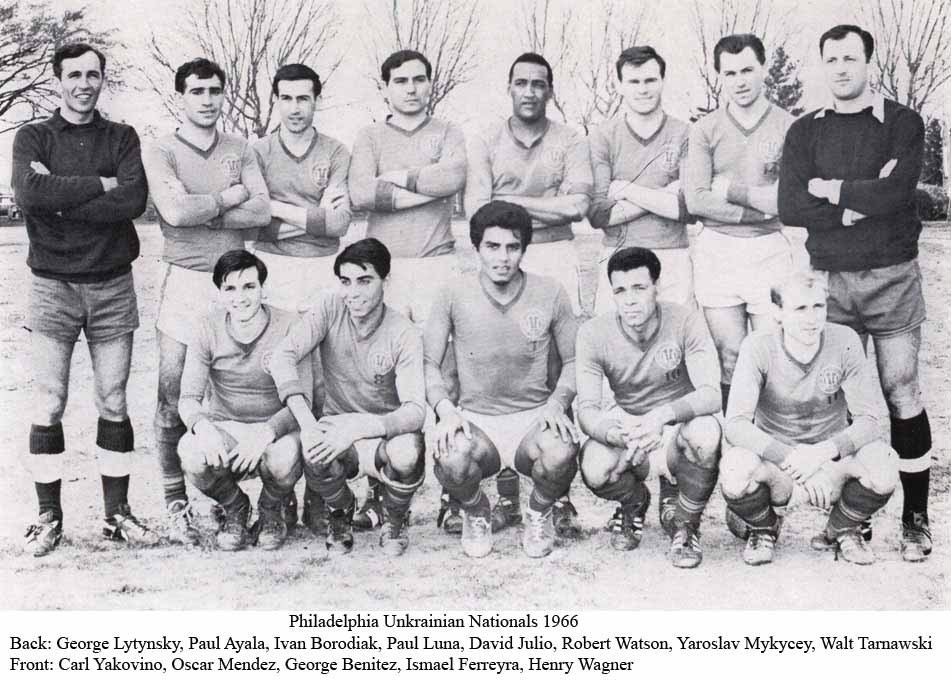
Invited by his friends to watch the Ukranian Nationals play at 29th and Clearfield, then an ASL professional game with charged admission, Len and his friends snuck through the fence and into the game. Mesmerized by the game’s passion and enjoyment, especially from players with Ukranian origins, Bilous found his forward path.
The players in the game included John Borodiak, Walt Tarnawsky, Walt and Gene Chyzowich, Alex Ely, and Mike Noha, who famously scored five goals in the 1960 Open Cup Final win over the L.A. Kickers, during the Nationals historic run of 4 Open Cup titles in a 6 year period, to this day one of the greatest stretches of success by any team in the American game.
After watching the Nationals, Bilous tried out for his junior high school team.
“I was in a gym, my Phys Ed teacher puts out some cones, says ‘dribble through the cones,’” Bilous said during an exclusive interview with Backyard Pitches. “I guess it was a test of coordination, and I had enough,” he says with a laugh.
Bilous made the team but had no boots to play, so his coach brought out a box of used shoes. He picked out a pair with leather studs nailed into the sole. “One day after practice, I come home, take off my socks, there’s blood in the bottom of my sock in the heel.” The nail from one of the studs, which then had only two in the toe and two in the heel, stuck up from the sole, and his father had to hammer it down.
Bilous followed his newfound joy for the game to Northeast Public then continued his career at Temple University where he joined the program as a walk-on. Unable to play in games due to the freshman rules at the time, he waited his turn and worked his way up in subsequent years to become a regular starter.
“We probably had the best bandaged team in the country,” he said about his Temple years coached by Pete Leaness, who was an All-American at Temple in 1929, the school’s first. Leaness led the Owls to two national championships (1951, 1953) and a career 245 victories. But because Leaness also worked as a full-time chiropractor, the players often waited every day for him to arrive.
“We started every practice by ripping shots at goal,” Bilous said. “That was the beginning of every practice. Forty five minutes we did that.” The lack of a warm up led to numerous injuries. “After I left Temple, I don’t think I had one pulled muscle.”
Undeterred by injuries and managing the role of a student athlete, Bilous found peace and happiness on the field with his teammates. He recalls one day recently when he entered the new locker room, filled with pictures, including one from the previous season’s team with a label underneath that read Sweet Sixteen. In 1968, Temple defeated Delaware 3-2 in the NCAA First Round before falling to West Chester 4-3.
“I never knew we had achieved anything like that,” he said, “because as a player I didn’t really care who we played, I was just into playing.”
His senior year, in the first game of the season, Temple played against rival Philadelphia Textile, then coached by Walt Chyzowich. Wladimir played for Textile following his return from service in Vietnam and spent much of the lead-up telling Len how Textile was going to win. Len scored the opening goal. “Then,” he said, “all hell breaks loose because these guys want to show us they’re better.”
Textile eventually found an equalizer, but Len was able to keep the trash talk within the family when his brother missed a chance over the bar from close range toward the end of the game. “Of course, he never heard the end of that from me,” Len laughed.
Textile, under Chyzowich, went 13-1-1 that season, reaching their first NCAA tournament but fell to Penn in the Second Round 3-2 (1-1) on penalties. Under Chyzowich, Textile became a national powerhouse throughout the early 1970s.
One of Bilous’ more memorable moments from his college days was joining several Temple teammates to train in the offseason at Frankford High School, then coached by Philadelphia and U.S. soccer legend Walt Bahr. Bilous and Casey Bahr had trained before with the Ukranians, and Bilous had played against Frankford throughout high school.
“I always knew Walt was considered a very knowledgeable guy. His teams were always very successful at Frankford High School. When you played Frankford, and I was at Northeast, you knew it was going to be a tough game.”
For Bilous, understanding what it meant to play at a higher level meant experiencing it for himself. “Walt’s there, and he’s very friendly, a very warm person. We’re playing, and suddenly Walt jumps in. I’m nineteen, twenty, twenty-one, and I’m thinking I’m pretty hot. I’m playing with guys like Lew Meehl, Charlie Duccilli, these guys are all good.”
Bilous felt as if he could handle himself against some of the best players in the area at that time but soon learned more about the former U.S. captain who shocked England in the 1950 World Cup. “I’m feeling pretty good about myself, and Walt steps on the field, and I go, ohh, this is what a real good player looks like.”
In addition to Leaness, Walt Bahr (1944) and Walt Chyzowich (1959) earned All-American honors at Temple and each has been inducted into the United Soccer Coaches (formerly NSCAA) Hall of Fame. Bahr (1976) and Chyzowich (1997) were also inducted into the U.S. Soccer Hall of Fame. Duccilli still ranks as Temple’s all-time leading scorer with 66 career goals and 132 career points. Following his pro career, Meehl went on to coach at Philadelphia Textile and Drexel, compiling 236 wins between the two schools.
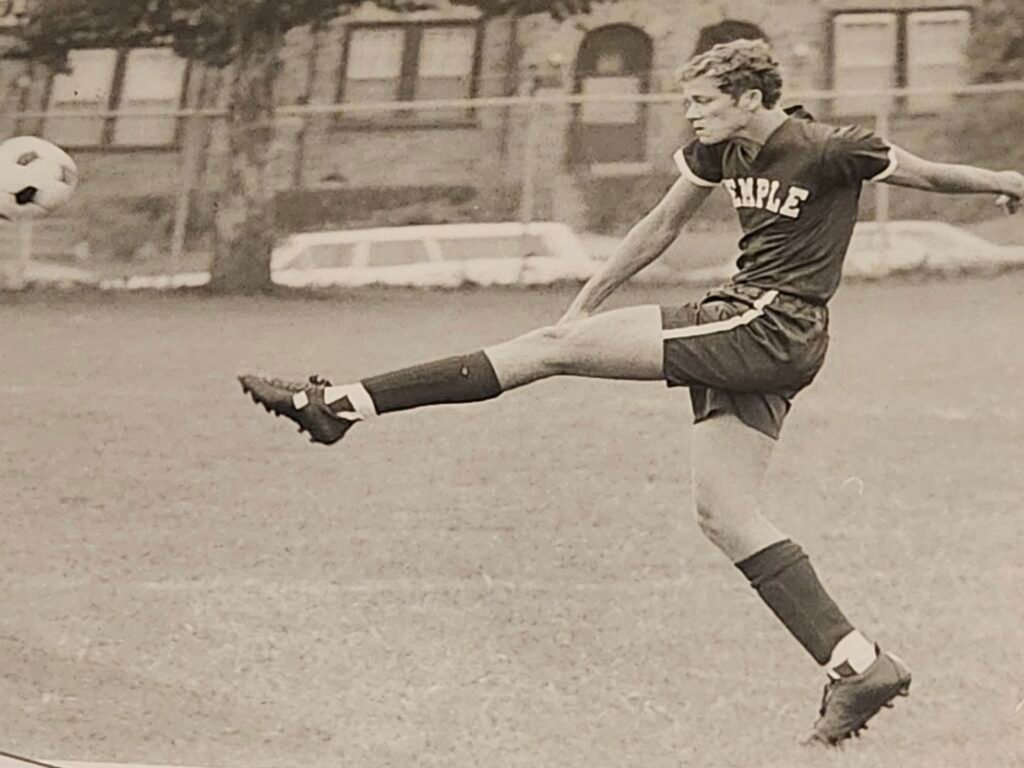
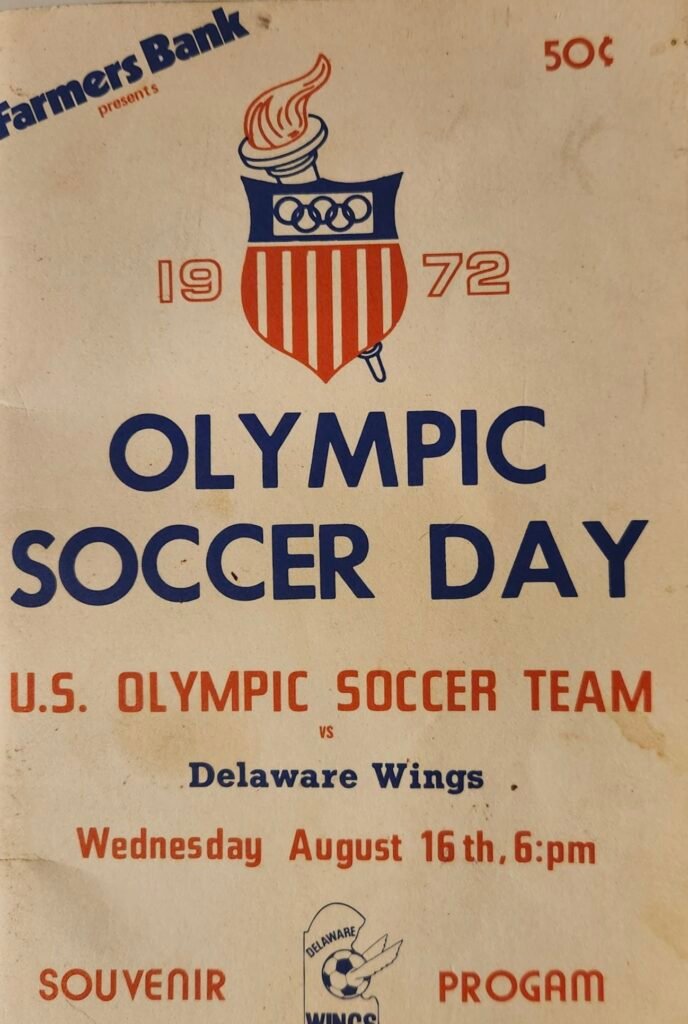
With his college career winding down, Bilous hadn’t thought much about his future as a player until Chyzowich selected him to play in all-star game against the U.S. Olympic team, which gave Bilous his first look into the life of a pro player. “Just like in junior high school when I said it’d be neat to play soccer, now I was thinking, it’d be neat to play pro.”
After graduating from Temple, Bilous made his debut with the Delaware Wings in the ASL. The ASL had been the country’s most prestigious league, dating back to early 1920s, with clubs throughout the Northeast, and had only recently been overtaken by the NASL and Rockstar Soccer. A year later, he joined the Philadelphia Spartans and played for his hometown club.
Life in the ASL was not as glamorous as the professional game today. Before TikTok and ride shares, players often worked full-time jobs and carpooled to away games with the average player earning close to $15 a game according to Bilous. The ASL was always operating on the edge, and players faced the financial restraints caused by limited budgets and transportation logistics, compounded by the influence of illegal gambling activities.
Once, while working a camp in upstate New York with Chyzowich, Bilous hitchhiked to Boston for a game with the Spartans, arriving late. As he prepared to warm up, he and his teammates observed their coach talking to Tarnowsky, who was pulled just before kickoff due to a toothache. Even with defender Larry Sullivan’s brilliant performance in goal as a backup, the Spartans eventually lost the game and later found out about a financial plot to prevent Tarnowksy from playing. On another occasion, while with the Delaware Wings, Bilous recalled the club’s decision to either fly to Boston and back after the game or drive and stay in a hotel because the team couldn’t afford to do both. The players chose to drive and stay over so they could experience the nightlife, likely even today a popular decision among most playing circles.
Eventually, Bilous transitioned into coaching, and like so many players and coaches from the Philadelphia region, he credits Chyzowich for helping him advance in his coaching career.
“My first coaching opportunity was with North Catholic High School,” he said. “The situation was the kids would get on the subway, take the subway to Hunting Park Ave, walk from Broad Street to Hunting Park.” After the players reached the park to train, Bilous had to prepare his sessions by thinking creatively. “You know how many goals they had at that park?” He held up his hands and forms a zero with his fingers.
One day, Chyzowich called and told him about an opening at Princeton University. In the blink of an eye, Bilous went from coaching high school at Hunting Park with no goals to the lush pitches of Princeton, coaching the Freshmen team. One of his players, Paul Malone, founded Lanzera with his brothers, and the company flourished throughout the 1990s and early 2000s.
Bilous believes no figure has had a greater impact on his career than Chyzowich. “Because he was such a strong connector, such a strong personality, to me, he was one of the most charismatic people I ever met,” he said. “If Walt walks in the room, everybody picks up his energy.”
Chyzowich and Bilous shared much more than their passion for soccer. Like Bilous, Chyzowich also spent time in a German displacement camp following the war, and his family made their way to the United States via Austria through Ukranian connections before settling in Philadelphia. By the mid-1970s, Chyzowich had become one of the most influential coaches in a country still trying to compete on the world stage. Chyzowich left Philadelphia Textile in 1976 to take over the role of U.S. Soccer Director of Coaching, which included leading the U.S. National Team, among other roles. He created the first national player pathway when he added U.S Soccer’s first youth national teams.
“A lot of people called him the father of coaching education,” Bilous said. “He was the mentor for so many of us, and so many of us got turned on to playing and coaching more because of Walt.”
Bilous had been coaching at Quinnipiac College for four years while also playing in the ASL when the Major Indoor Soccer League began operations in December 1978 with six franchises.
“I had been at the coaches convention in San Francisco,” he said. “I got some names of the teams and GMs.”
Cleveland hired Gordon Fearnly, a former Bristol Rovers player who was still finishing his career with the Fort Lauderdale Strikers. The Philadelphia Fever hired George O’Neill, a regular in the Philadelphia leagues who later coached at Penn. Houston hired Timo Liekoski, who played for Al Miller at Hartwick and served as an assistant under Miller with the Dallas Tornado. The other hires included Red Star product Don Popović (New York Arrows) and Bruno Schwarz (Pittsburgh Spirit), who later retired from North Allegheny as the winningest coach in PIAA soccer history with 516 wins.
“I call Cincinnati,” Bilous said, “talk to the GM Barry Mendelson. He gets in touch with Walt Chyzowich.”
Mendelson, a radio and tv producer, served as a senior executive for both the Boston Celtics and New Orleans Jazz, one of many new owners and execs entering the foray of professional soccer’s latest experiment. The ownership group also included Pete Rose, who signed a contract with the Philadelphia Phillies weeks before the opening of the MISL season.
“Walt Chyzowich gives the green light. The guy calls me back and says come in. You’ll be starting next week. He hired me over the phone. One phone call to Walt, that’s how much trust they had in what Walt had to say.”
Building a roster with Americans Ty Keough, Keith Von Eron, and leading scorer Tony Graham, Bilous started from scratch in a league made up of mostly college players and foreign pros, many of whom juggled outside and indoor as the NASL still reveled in its peak years prior to its rapid decline.
The Kids played the New York Arrows in the inaugural game at the Nassau Coliseum, which ended in a loss. They went 16-8 during the regular season and lost to the Arrows in the playoff semifinals but were unable to continue operations after an average of 3,191 at the Riverfront Coliseum. The Kids played seven of their twelve home games at 1:35 with the arena crew flipping the soccer court to prepare for a Stingers game that night. The club never made it to its second season.
After the Kids folded, Bilous connected with the Pittsburgh Spirit, owned by Edward DeBartolo Sr., a prominent real estate developer and owner of the San Francisco 49ers and Pittsburgh Penguins. Under Bilous’ leadership, the Spirit went 18-14 in the regular season, much improved from their 6-18 record in year one. The Spirit saw their average attendance grow from 2,800 to 5,100 at the Civic Arena, also competing for time slots with pro hockey. Once again, Bilous and his team lost to the New York Arrows in the semifinals, this time in a best-of-three series. He earned MISL Coach of the Year honors, but the Spirit suspended their operations following the season.
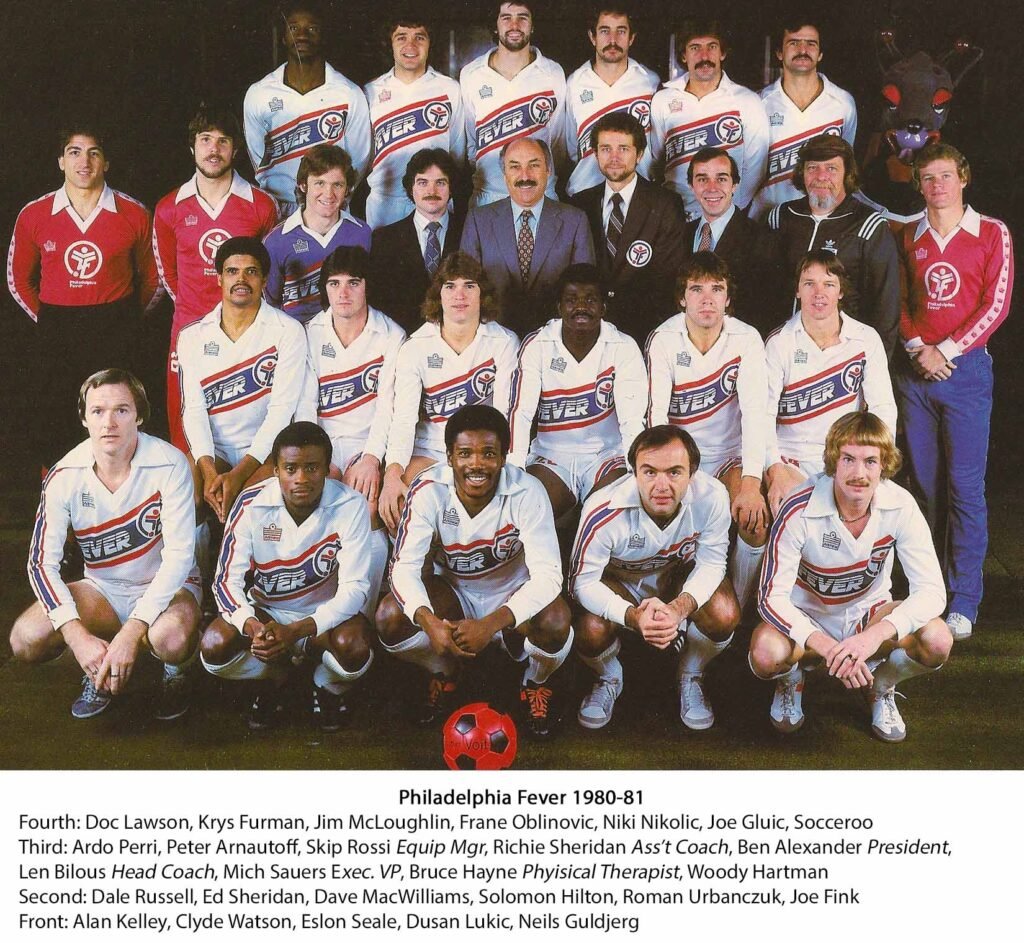
For the 1980-81 season, Bilous returned home to coach the Philadelphia Fever, who had gone from reaching the championship game in MISL’s first season to missing the playoffs the following year. Even with a lineup that included local star Dave MacWilliams, top American striker Joey Fink, and the reliable Von Eron in goal, the Fever couldn’t compete with the ever-growing Arrows and the upstart Baltimore Blast and finished 18-22, missing out on the playoffs for the second year in a row. The Fever replaced Bilous with color commentator Skip Roderick before the end of the season. The club lasted one more season with Chyzowich at the helm before folding, unable to generate revenue in a market shared with the Flyers and Sixers, both franchises entering their golden years.
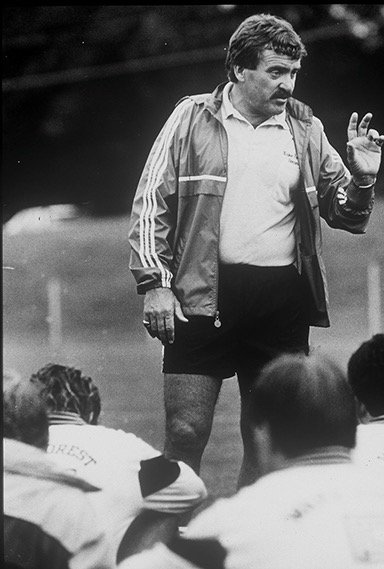
Early in his coaching career, Bilous developed a philosophy that came from a sensory experiment, his creative flow meeting his receptiveness for growth and his desire to teach. The journey resulted in Vision Training, the coaching method he developed in the 1980s and has taught ever since. The theme of Vision Training is teaching players to be more aware of their surroundings on the field and less dependent on an outsider, a coach, or a parent on the sidelines barking instructions every second. Soccer, more so than other team sports, demands players to make quick decisions in the moment, and teaching players to be more present for those moments makes them better soccer players.
“It’s impossible not to take advantage of something that will accelerate and improve your game and your decision making,” he said. “Not only that, it will also affect how you view life as well.”
When asked about the origins of his lifelong teaching methods, he said, “I have to blame somebody, so I have to blame Walt Chyzowich.”
Bilous recalls Chyzowich’s presentation at a coaches symposium in Florida when he said, “If you want to see what a great player does, don’t watch the game.” Bilous expounds, “The best players only touch the ball two to three minutes in a game,” he said, “so what they’re doing the other eighty-seven, eighty-eight minutes is what makes them the best players.”
While coaching at Quinnipiac in Connecticut, Len traveled to watch Franz Beckenbauer play for the New York Cosmos at Giants Stadium. “I noticed, he never received a pass without [looks over his shoulder]. After making a great pass, first thing he did was check his surroundings again before deciding if he could attack or stay behind.”
Bilous spent the entire game following Chyzowich’s advice, watching everything Beckenbauer did without the ball. His mentor’s words rang as true as ever, and he began to see the game differently. Bilous mentioned an interview with George Best where Best said “if you tell Beckenbauer to close his eyes, he’ll still be able to tell you where everyone is on the field.”
Watching Beckenbauer inspired Bilous. He began his life’s work helping players sense the field and their surroundings better, tapping into the creative side of the game, an often overlooked skillset as physical fitness and skill development dominated most coaching methods.
“Until that experience, all I knew was what everybody repeated. The mantra that great players are born. Players with great vision are born. None of them are developed.”
Len worked on a wall, scanning his surroundings before every received pass, eventually building on the repetition for awareness that translated into his own performance. “At first, I have to think about it because I’ve never done this in a game, but once I start doing it, my thinking went away. It started to become reflex. I did it enough times that it became reflexive.”
After using his new methods in his own games, Bilous said, “It felt like the game was fifty percent easier.”
Along with his business partner, TJ Kostecky, an East Stroudsburg alum and longtime college coach who’s currently the head men’s soccer coach at Bard College, Bilous built a company on the foundation of pre-action awareness, beginning with how to prepare before receiving a pass. His methods have since expanded into other areas of the game, like shielding, turning, defending, and goalkeeping. He believes all players on the field can benefit from being more aware and present. And because he was still playing while coaching, he experimented on himself as well as with his players, developing his philosophy over the years and fostering a more player-centric model that edged away from the common coach-centric models of his time. In 2020, Bilous and Kostecky were inducted into the Ukrainian Sports Hall of Fame.
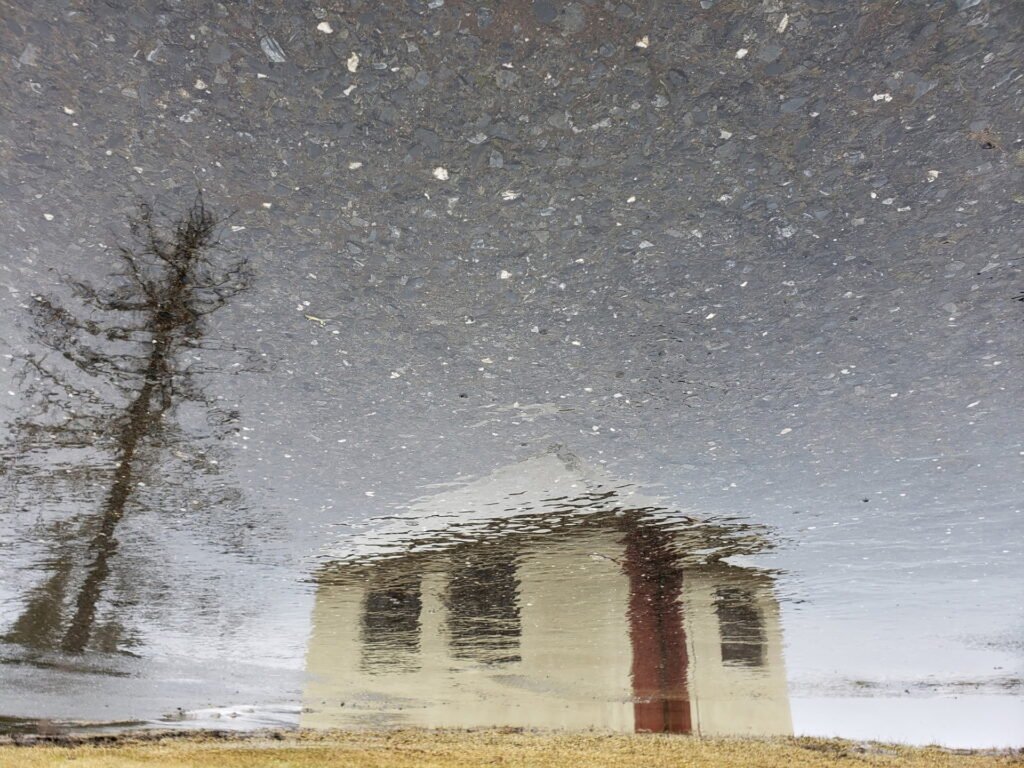
In addition to a lifelong love of soccer, Bilous also has passion for the arts, notably poetry.
“I’m not sure when I started writing poetry,” Bilous said, but he believes it began his senior year at Temple when he took a class on meditation. “After I started to learn to meditate and continue to meditate, there was a shift in things that were happening in my life that were much more positive. It brought me closer to my own spirituality. Also, I think it enabled more creativity.”
Bilous’ early writings came from feelings of deep sorrow. He wrote one of his first poems for a good friend who’d passed away at the age of twenty-nine. He’s been writing most of his life, but his frequency and focus on the craft picked up ever since he left the soccer retail business. He also enjoys photography, and some of his pieces are currently on display at the Phillips’ Mill Gallery in New Hope.
Bilous follows a consistent practice of meditation and believes the artistic inspirations often follow close behind. “As I continue to write, a lot of my poems come either while I’m meditating or after I’ve meditated.” After processing an idea, he quickly writes it down so he doesn’t forget, but even he’s impressed with how much of the idea remains clear. “It’s amazing that you can remember as much as you do, and some of the poems speak to me, and when I share them with others, they also speak to them.”
As we discussed soccer and art, Bilous expanded on play and creativity. He still plays soccer every week and also spends a considerable amount of time tapping into his creative side. Though he’s written about the pains in his life, he believes it’s easy to find positive influences all around him.
“I start to think about it in terms of connecting all the dots of experiences in your life where you find joy,” he said, “Soccer became a huge piece of my life’s joy. Writing poetry brings joy. Coaching brings joy. Doing different types of art that I decide to do brings joy, and to me it’s the same idea of playing soccer. What can you play with in your life? You can play with almost anything.”
Bilous finds plenty of inspiration for play throughout his Hellertown farm.
“When I walk outside, every day, there’s something always different, and I’m able to notice that there’s something different. So for me, I’m playing with the visual. And to me, being able to play is really so important because if nothing else it brings joy. And when you share it, you can see that joy also has that ripple effect.”
Bilous believes his ability to mediate and play allows him to tap into something bigger, something creator Rick Rubin calls Source and other artists like Steven Pressfield call the Muse. Many artists believe a form of universal inspiration can only be found when we’re able to receive it.
“You can have a vision, and something can manifest. Or something can happen, and it’s unexplainable,” he said. “There’s unexplainable things that we normally don’t tap into unless we become predisposed to it. We become more predisposed to those events when we’re in a very calm state.”
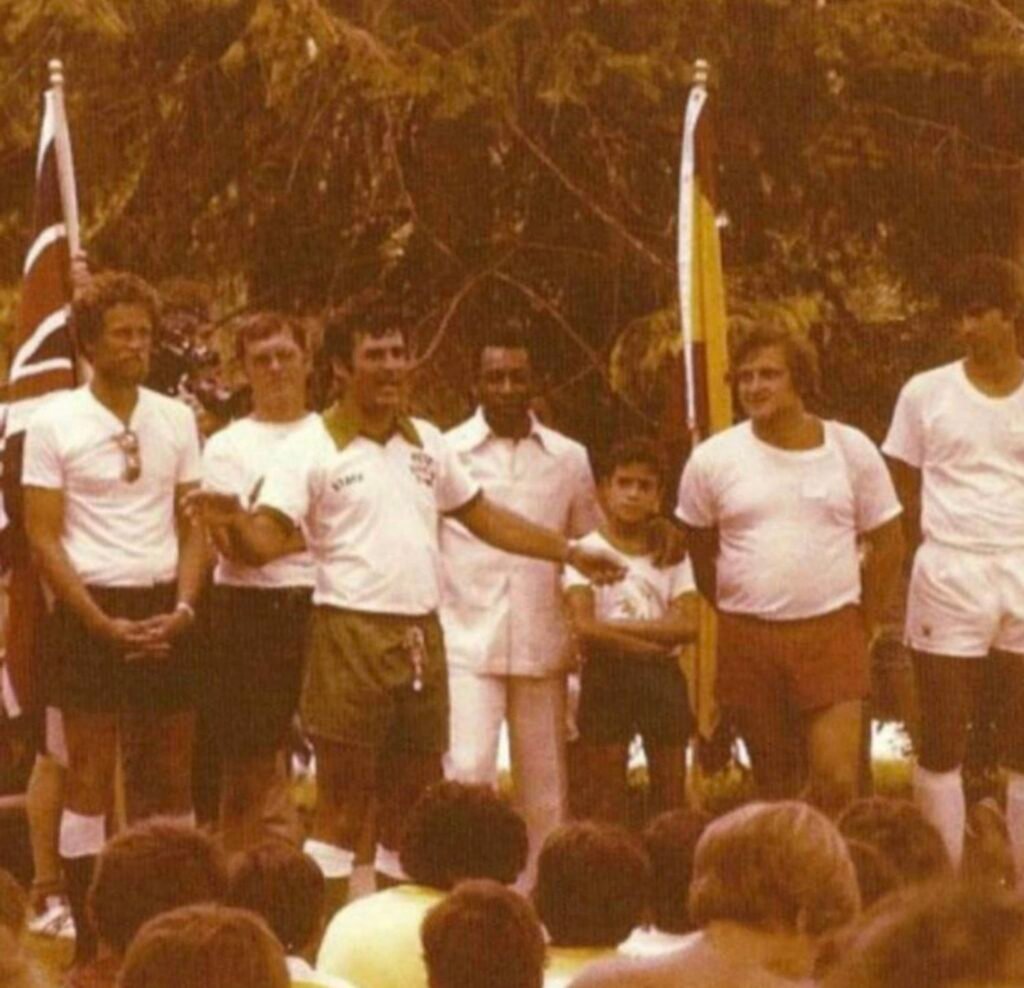
One of the poems Bilous wrote, “A Kick for Harmony,” goes back to his time working soccer camps with Pelé.
One final story might summarize the belief Bilous has in the power of visualization, manifestation, and greater powers at play as it can relate to soccer and beyond. During a presentation Bilous gave prior to our interview, he shared a story about a time when he bought a motorcycle and spent a considerable amount of time fixing the brake pedal. After bending the metal with a blowtorch to straighten it out, he needed flat black spray paint to finish the job. But since he only had paint with a glossy finish, he decided it wasn’t worth buying a new can and let it be. Some time later, he was traveling back from a soccer camp in upstate New York, passing by his brother’s house in New Jersey. He was tired, nearing the end of a long ride, and uncertain if he wanted to stop.
At the last second, he got off the exit ramp, and as slowed down, something off to the side of the road caught his eye.
For the full interview with Len Bilous and Backyard Pitches.