Photo courtesy of Carl Gulbish
Every four years, U.S. Men’s National Team doesn’t win the World Cup, and every four years soccer in America goes under a giant microscope. Though the game in America still has issues to resolve, it may be harsh to judge all the country’s problems from a single tournament. It may be even unrealistic to tie the national team’s performance in one tournament with the youth game and player development as a whole. Soccer in America has come a long way since 1990, and the latest performance in the World Cup is proof the journey ahead is still full of obstacles, but the conversations and dialogue provide evidence that we care. That’s progress, too.
The following are notes from the aftermath of the U.S. team’s exit:
Form Matters
There’s a difference between belief and expectation. Though we all believed a Miracle On Ice performance was possible, the expectation was the U.S. wouldn’t advance far in the knockout rounds. They entered the tournament ranked 16th in the FIFA rankings, one spot behind Italy, who failed to qualify for the third-consecutive time and are dealing with way more issues than the U.S. when it comes to expectations.
The U.S. entered the World Cup with question marks. Last spring, they lost the Nations League semifinal to Panama (44th) and the third place game against Canada (30th). Then they lost the Gold Cup final to Mexico (10th). Though the U.S. was missing some regulars like Pulisic and McKennie (more on them later), Mexico’s Concacaf double was already a sign of the U.S.’s weakening stronghold in the region.
Then there’s the matter of their performances against top opponents leading up to the World Cup. They were beaten 2-1 by Turkiye (27th) then stomped 4-0 by Switzerland (14th). Friendly wins over Japan (17th), Australia (28th), and Uruguay (20th) were positive signs at the end of the year, and a 2-1 win over Paraguay in Chester proved to be a key result against a South American opponent in great form. This was a month before we knew they’d face Paraguay in the tournament opener.
In March, the final international window before the tournament, the U.S. was thrashed 5-2 by Belgium (8th) and 2-0 by Portugal (7th). Though the latter’s score line appeared respectable, the game never really felt as close and looked more like a training exercise for the European Nations League champions.
So questions remained.
Did they have the quality and depth? The goalkeeper situation still hadn’t been locked down though Media, PA’s Matt Freese earned the job outright for a string of solid performances for both club and country. Could anyone other than Falorin Balogun score? Will injuries become a factor?
The biggest question mark was Christian Pulisic. Remember last summer when he stirred up a firestorm of controversy for taking a break? His biggest critic, Landon Donovan, who also took a break from the game in 2013, led the anti-Pulisic charge both pre- and post-World Cup, which created strife among the USMNT alumni network.
After lighting up Serie A with A.C. Milan (2023-24: 16g,10a, 2024-25: 17g, 12a), Pulisic chose restoration over his country. There’s nothing wrong with a professional athlete taking a break. Burnout is real, and with the 24/7, eleven months-a-year schedule that players endure in the modern era, a player admitting that something is wrong can be a positive step toward understanding athletes are not robots and pawns.
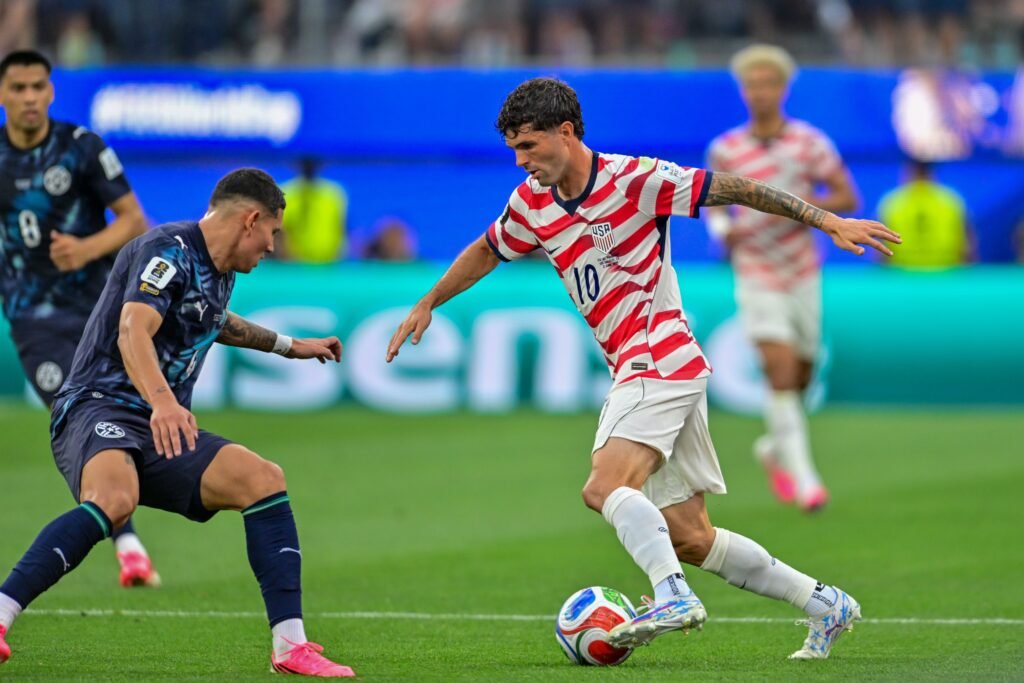
Pulisic started off the season well then limped through the rest, hampered by nagging injuries and poor form, reminiscent of his past struggles at Chelsea. He finished with 10 goals and 4 assists, playing nearly 1,000 fewer minutes than the previous season. Since the start of 2026, he contributed only two assists. And when he subbed out at halftime against Paraguay following a stirring performance, we saw both sides of the Pulisic coin. He can be both the best U.S. player on the field and a liability.
Herm Edwards, former Philadelphia Eagle and current TV analyst likes to say, “The best ability is availability.”
And let’s remember, Pulisic doesn’t play for the Milan of the late 1980s and 90s with the likes of Ancelotti, Donadoni, Gullit, van Basten, Maldini, Weah, and Pirlo. Milan finished 5th in Serie A and will enter next season in the Europa League.
Pulisic has been an experiment for the U.S. over the years. He’s played the ten, the false nine, and the wing, his natural position. He’s been our best performer in many of the games he’s played. Last World Cup, he contributed to 60% of the U.S. team’s goals. But his reputation for hiding in big games followed him into this World Cup, where he was largely absent outside of the first forty-five minutes. On the brightest stage, stars take it to the next level. Messi pulled Argentina out of certain defeats. Mbappe changed games in a split second. Haaland played the role of a silent killer. Bellingham emerged victorious out of the trenches. Rodri resembled a maestro.
Pulisic is not on the same level, but he’s our best version of a star. Where was he when his team needed him most?
Raising the Level of Our Best Players
In January, Matt Crocker, then Sporting Director of U.S. Soccer, presented some remarkable numbers at the United Coaches Convention in Philadelphia. Among his findings was the correlation between the number of the world’s top players on a national team and the performance of that national team, specifically reaching the quarterfinals or better in major tournaments. The following quote comes from my article:
The data suggests that a country needs at least 4 players in the top 250 to win 50% or more of their games and compete for major trophies. The U.S. currently has one. Spain, the world leaders, average 33.8 players in top 250 over the past 10 years, followed by France (24.5), Brazil (23.5), and England (23.2). The U.S. average is .5 (essentially the same player). When a country has 15 or more players in the top 1,000, they tend to win more than 50% of their games and compete for trophies. The U.S. averages 5.8, which ranks 33rd in the world.
In his assessment, the U.S. men do not have enough top players to compete for a World Cup.
Crocker resigned in April to take a similar position in Saudi Arabia.
The discussion of talent and depth has followed U.S. Soccer for a generation, and every four years the major sticking points get recycled. In 2022, when the U.S. lost in a similar fashion to the Netherlands in the Round of 16, the reasoning was the age of the core players. In the 2018 disaster, the MLS-Europe debate moved front and center with the philosophical shift from Bundesliga champion Jurgen Klinsmann to MLS champion Bruce Arena. In 2014, the U.S. also lost to Belgium in the Round of 16, though at the time, Belgium had been among the favorites and the U.S. advanced from a difficult group that included Ghana, Portugal, and Germany, who won the tournament. In 2010, the U.S. lost to Ghana in the Round of 16, and in 2006 they failed to advance from the group stage, as they did in 1998 and 1990.
The best U.S. performance in a World Cup remains their quarterfinal appearance in 2002. The squad included captain Claudio Reyna (Sunderland), John O’Brien (Ajax), Brian McBride (Preston North End), Brad Friedel (Blackburn), and Tony Sanneh (Nüremburg), among others with European club experience. Of the starting XI in the quarterfinal loss to Germany, only Landon Donovan (San Jose-from Bayer Leverkusen), Eddie Pope (D.C. United), and Pablo Mastroeni (Colorado) played in MLS.
Since then, more of the top American players began to venture into the best leagues, something Klinsmann later preached at every available opportunity. Many made their way to the English Premier League, arguably the best in the world top to bottom. McBride thrived at Fulham, along with Carlos Bocanegra, and eventually Clint Dempsey. Friedel and Kasey Keller became longtime regular starters, followed by Everton legend Tim Howard. Philly’s Bobby Convey spent five seasons at Reading, eventually moving to the EPL when the club earned promotion in 2006. Michael Bradley, Jozy Altidore, and Alejandro Bedoya all saw their career paths trend upwards after lengthy spells in Europe. At the same time, the U.S. continued to tap into American bloodlines fully entrenched in European models, going from players like Thomas Dooley and Ernie Stewart to Jermaine Jones, Fabian Johnson, and Timothy Chandler, to Balogun, Sergiño Dest, and Antonee Robinson, all players who never experienced the trials and tribulations of the American youth system like their national team counterparts.
If Crocker suggests the best U.S. players need to crack the top 250 in the world, they need to be playing in the best leagues, but also for the best teams, which is something we haven’t quite yet experienced.
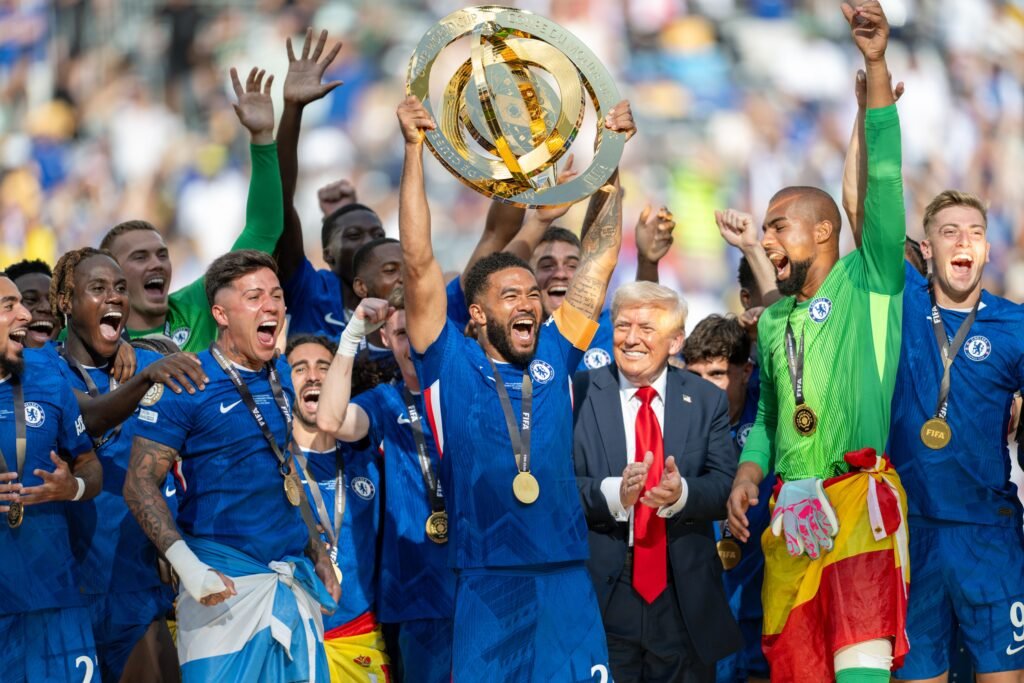
The lone exception is Pulisic, who became America’s most expensive transfer when he went from Borussia Dortmund to Chelsea in 2019. With Chelsea, Pulisic set a number of milestones, including second American to score an EPL hat-trick (Dempsey) and second American to win a Champions League (Jovan Kirovski). In 2020, he became the first American to score in an FA Cup final, then was forced off due to injury early in the second half. He also became the second American (Kirovski) to win the Club World Cup after Chelsea defeated Palmeiras 2-1.
But as much as we want to claim Pulisic as product of the American soccer system, he left for Dortmund at age 16, eventually sharing the field with other youth stars like Ousmane Dembélé, Achraf Hakimi, and Alexander Isak while learning from German internationals Marco Reus and Mario Göetze. His move to Chelsea could have been more about the financial implication of an American fanbase thirsty for the EPL rooting for an American player. After his first season at Chelsea, which wasn’t until a year after signing, his performances improved despite the club’s turmoil and a global pandemic. Under Thomas Tuchel, Pulisic became largely a role player, like he’d been at Dortmund, coming off the bench to produce a bit of magic only to suffer some unfortunate injury not soon after.
But it can’t all be about one player. Pulisic has reached his ceiling. Where are the other players pushing for top spots in the world player rankings?
Balogun, the Arsenal academy grad, rejuvenated his career at Monaco and had the most notable World Cup performance. Last season, Monaco advanced to the knockout round in the Champions League, where he stunned eventual winners PSG with two goals in the first twenty minutes. Eventually, PSG won the game and the tie 5-4 on aggregate. Balogun was named Monaco’s Player of the Year, but the club finished 7th in Ligue 1 and will enter Conference League qualifiers in late summer. He may not be a Monaco player when they do.
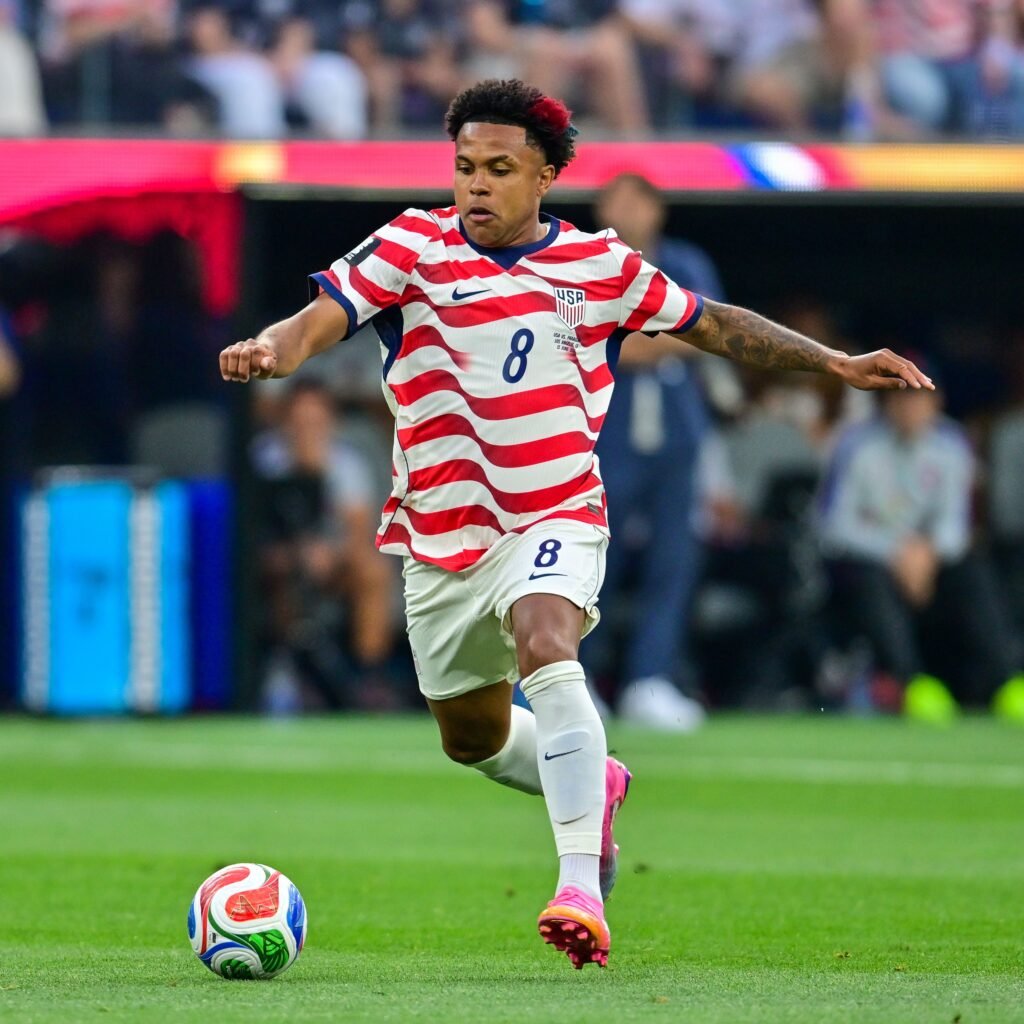
Weston McKennie, a product of the FC Dallas Academy, burst onto the European scene with Schalke, though his move to Juventus in 2022 had its share of obstacles. He became the first American to play in Serie A and scored his first Champions league goal against Barcelona in 2020, but his early years also included a loan to Leeds at the end of the 2023 season, which at the time, cast doubts about his future at the club. Since the 2023-24 season, he’s been a reliable midfielder for Juventus and just had his most productive season (9 goals, 8 assists), earning a spot in the Serie A Team of the Season. Juventus finished 6th in Serie A and will play in the Europa League this season.
After Pulisic and McKennie, the rest of the American core begins to advance the Euro-based narrative a tick further than the past. Tyler Adams (NY Red Bulls) had another strong season in the Premier league with Bournemouth, as did Robinson at Fulham. Chris Richards, also an FC Dallas academy grad, has been on the rise with Crystal Palace, who won their first international trophy, capturing the Conference League weeks before the start of the World Cup. The previous season, Richards became the second American (Howard) to win the FA Cup.
Malik Tillman had a breakout performance for the U.S. at the World Cup with back-to-back free kick goals and overall outstanding play. The former Bayern Munich and German youth international joined Bayer Leverkusen from PSV last summer in the second-highest American transfer fee (Pulisic). At 24 years old, he’ll likely be one of the players to watch in the next World Cup cycle. Alex Freeman, son of Green Bay Packers Hall of Famer Antonio Freeman, recently moved to Villareal from Orlando City and is another U.S. player on the rise. The 2025 MLS Young Player of the Season scored his first U.S. goal in the win over Australia.
From there, the U.S, soccer depth becomes a collective of players either breaking into smaller European clubs or shining in MLS, which leaves the depth essentially in the same place since 2002. Ricardo Pepi (PSV), Haji Wright (Coventry), Brendan Aaronson (Leeds), Alexandro Zendejas (Club América), and Joe Scally (Borussia Mönchengladbach) hardly got a sniff at the World Cup, with Pepi’s minutes largely coming at garbage time. Austin Trusty (Celtic) scored his first international goal against Turkiye, but he and fellow Union graduate Mark McKenzie (Toulouse) fell behind 38 year-old Tim Ream in Pochettino’s back five. Sebastian Berhalter could be the first American player to move to Europe after his World Cup, with the latest reports of him going to Championship side Middlesbrough from Vancouver. Gio Reyna (Borussia Monchengladbach) scored a beautiful goal in the 4-1 win over Paraguay, but despite the boisterous shouts from his popular social media followers to be a regular starter, he’s yet to impress on a regular basis and also suffers a bit from the Pulisc injury bug. The 23 year-old NYCFC prodigy had less than 600 minutes for Gladbach in 2025-26, close to his annual average over the past five seasons.
Freese (NYCFC), Max Arstefan (Columbus), and Miles Robinson (Atlanta) currently remain in MLS while Matt Turner’s career followed a roller coaster from MLS Goalkeeper of the Year to Arsenal castaway, landing him back in New England. Chris Brady (Chicago) will compete for the top goalkeeper spot over the next four-year window, the likeliest to replace Freese should he have another slip up.
Somewhere lost in the aftermath of the U.S. team’s exit from the World Cup was the reduced role of Timothy Weah (Marseille). The Juventus loanee had been a regular in the U.S. squad since 2022 but only featured in the Turkiye loss, and was largely a non-factor. The son of Liberia’s Ballon d’Or winner George Weah, Timothy saw his minutes reduced by Dest and Freeman, a sign he too may have peaked. One can only wonder if his diminished role could also have been due to his poor red card against Panama in the 2024 Copa America, which led to the U.S.’s failure to make it out of the group, or his recent comments about the high ticket prices for the World Cup, which Pochettino responded, perhaps with influence from above, along the “shut up and dribble” variety.
Is Pay for Play the Biggest Problem?
Pay for pay faced the wrath among soccer fans after the U.S. exit from the World Cup, and for good reason. The cost of soccer in America is ridiculous.
Some of the latest quotes from parents range from an average of $3,000 to $5,000 a player per year. Clubs compete at every level for elite status, promising better opportunities for scholarships by persuading parents “our way is the best way.” There are many good clubs, across every city, and the level of coaching has improved tremendously from the previous generation. We know more about the game in terms of tactics, training, science, and mental performance, yet in many ways we don’t.
The biggest problem U.S. Soccer faces is a lack of meaning. The treatment of kids as professional soccer players is ruining the joy for a game once rooted in the experience of establishing lifelong skills and friendships.
“But,” you’ll say, “aren’t the best players supposed to be playing at the best clubs if we’re going to be successful in a World Cup? That’s what you said.”
I did. But for 99.9% of us, soccer is a gateway to a more fulfilling life. It evolves beyond juice boxes and orange slices into lifelong friendships, business networks, and partners, all of which come from the connections we make from the beautiful game. Soccer careers don’t have to end after high school or college. The opportunities in soccer are expanding.
Of all the lessons I’ve learned about player development, the most important may be that development doesn’t have a timeline. How one performs at the age of six or eight or twelve is not indicative of the player’s future. Being the best player at eighteen still doesn’t guarantee success at the professional level. A player’s career is still largely driven by motivation, ambition, and grit, but the players at the highest level will often remark how much they love the game, how they obsess over it day and night. Their drive comes from within.
However, and I cringe as I admit this, Alexi Lalas was onto something when he asked, “Who pays for soccer?”
Better soccer has costs: coaching, equipment, field usage, uniforms, registration fees, league fees, tournament fees, cup tournament fees, and referee fees. I may only be scratching the surface (travel expenses and medical bills come to mind).
According to some, free soccer is the answer to winning the World Cup. But if we’re going to make soccer free, then surely we’re going to make football free. And basketball and baseball and volleyball and dance and gymnastics. What about hockey? Ever ask a hockey parent how much they pay annually to support their children? Hockey parents in the U.S. are borderline refinancing their homes to pay for rink time, travel, and equipment.
Our culture is based on the wealth of opportunities. We are a sporting country, and our strength lies in variety. Our best athletes come from all walks of life, and the accessibility of a sport and its engagement at a young age are key factors.
We can make soccer more accessible. We can make soccer less expensive (though no one’s stepped up with a good solution). We can go into lower-income areas with high-level training and fund grassroots programs. We can compete with other sports. But all that comes with a cost, and outside of the Arthur Blanks and Michelle Kangs, who is footing the bill?
“Our best athletes should be playing soccer,” is another common phrase repeated after World Cup losses.
Our best athletes should be playing whatever they want to play, whatever’s best suited for them. The choice has to be intrinsic if it’s going to last.
Usain Bolt is a huge soccer fan. On a soccer field, the world’s fastest human is average. Chad Ochocinco is another big-name soccer supporter. The All-Pro once gave MLS a try and later ended up playing in several adult amateur leagues after his football career ended. JJ Watt and Patrick Mahomes were some of the other notable American athletes attending the World Cup. Add Zach Ertz, Michael Wilson, and Dansby Swanson to the list of elite athletes who married into the game. Which one of them stops Charles De Ketelaere from scoring two goals? Who shuts down Youri Tielemans in the midfield?
The Philadelphia Union, our hometown club, funnels talented players through their system using a model more representative of the Europeans and South Americans. They are better than most in our country. They have a world-class facility, experienced coaches, the latest in sports science, sports psychology, and education. They built the infrastructure and the vision to raise the level of youth players and get them closer to professional careers. For that, I respect and applaud them.
But who pays for that success? The Philadelphia Union. Are they now responsible for covering the cost for all soccer players in the area in order to make the game more affordable? They barely have enough money to buy a mid-level Designated Player.
Recently, the Union announced a school program they’ll be administering within several local school districts. As a Physical Education Teacher, I have thoughts on the matter. Because now, as we’re attempting to make soccer free, it’s replacing something else and being treated as more important. Is a for profit soccer club aware of a public Physical Education program’s constraints? In the limited time I spend with students, which equals 40 to 45 minutes a week, 36 times a year, minus assemblies, holidays, half days, fire drills, and intruder drills, am I now going to take one fifth of my year to teach students soccer? And the Union way, no less. My first reaction was that I’d be teaching a unit on counter-attacks and kicking the ball out of bounds to press a throw in. My students still come to me with their Crocs in sport mode, yet I’m going to show them how to run a third-man combination?
I’m kidding with some of this. I’m sure the program is organized and age and skill appropriate. And it checks the boxes of providing more access to the game. Personally, I would love to teach an extended unit on soccer, but that’s not my role of helping students find the activity they’ll love for the rest of their life. They don’t have to love mine.
It’s also a positive marketing strategy. The same reason Good Humor is a top-seller in school cafeterias nationwide.
My colleagues and I have attempted other initiatives in the past. Outsiders may not know this, but every sport has a school initiative. We piloted a very good tennis program, and I’m contacted often by the local coordinator about supplies and updated lessons and curriculums, which covers a six-week and a twelve-week model. I enjoy tennis. It’s an engaging sport, and like golf, for much of its history, it only existed among the elite and overprivileged. More kids should be playing tennis.
But again, it’s sports competing against sports for the attention of our youth. It’s prioritizing one sport over another, neglecting other activities like dance, gymnastics, adventure skills, and fitness, which have just as many, if not, more lifelong benefits than competitive sports but get nowhere near the same level of support.
We want free soccer in schools, yet we still serve unhealthy lunches and call thirty minutes of recess adequate.
Unlike some of the world’s soccer powers, we are not a 24/7 soccer country. Even though I may be a 24/7 soccer individual, trying to make others like me shouldn’t be the goal. The goal should be to develop a love for the game.
Let kids be kids. Let them explore. Allow them to find what brings them joy and meaning. Our generation was never directed like this, and in fact, our generation was more known for rebelling those directives. Soccer doesn’t have to be twelve months a year. Take some time off. Go to the beach. Go to the mountains. Go overseas. Experience other cultures.
Because a weekend getaway with family is something our kids will remember ten years from now. Not the 2-2 tie against the team from Northern Virginia in the dying summer heat where the ref made a bad call that cost them a chance at late PK.
And to be honest, our kids may learn just as much about themselves from successfully riding a crashing wave than executing a two versus one on the wing.